Session at EARCAG 2027, “Aspiring Otherwise with East Asia: Critical Geographies for Critical Times”
Seoul National University Asia Center · 29 June – 2 July 2027
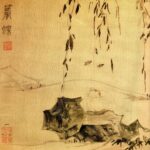
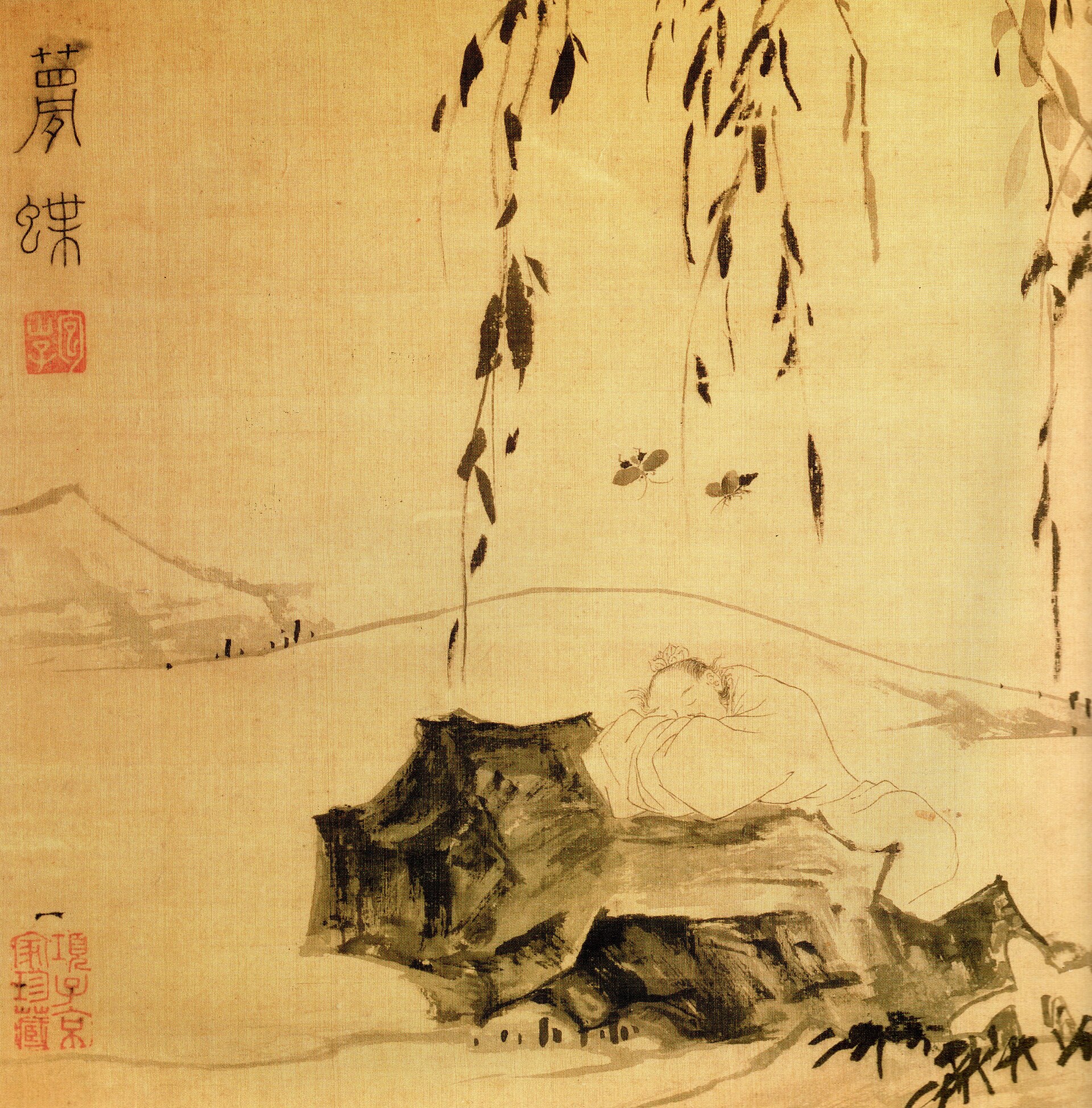
Image: Lu Zhi, 莊子夢蝶 (Zhuangzi Dreaming of a Butterfly), Ming dynasty. Public domain, via Wikimedia Commons.
Overview
Freedom has a geography. It is not an abstract principle or a formal right but a set of concrete practices — saying no, moving away, building something else in the cracks of the existing order. Drawing on Graeber and Wengrow, we take the freedom to disobey and the freedom to move away as scaffolding for a third, more creative freedom: the freedom to make new social realities. Refusal and escape are never only rejection; they already entail the construction of a different world, taking shape upon and in friction with the very relations they refuse.
Recent scholarship has charted rich geographies of this double movement, from Scott’s Zomia and Harney and Moten’s undercommons to work showing that refusal is itself a political theory (Simpson), that escape precedes control (autonomy of migration), and that the urban poor remake space through “quiet encroachment” (Bayat). Yet these frameworks have been forged overwhelmingly through Black radical thought, Indigenous thought, and Euro-American movements. What happens when they meet East Asian urban experience? East Asia does not merely supply cases: it holds its own genealogies of state-evading freedom — from medieval Japanese asylum spaces (muen) and “wandering peoples” (hyōhakumin) to Zhuangzi’s refusal of capture through uselessness. Institutions themselves are sedimented escape; yet every institutionalisation of freedom also founds a new exclusion, and so escape begins anew.
This session invites papers on refusal, escape, and different world-making in East Asian cities, asking what East Asian cases and concepts contribute to, challenge, or reframe in existing geographies of freedom. Topics include, but are not limited to:
- Informal dwelling and precarious communities as non-state or state-evading spaces
- Squatting, occupation, and alternative housing practices
- The self-organisation of labour and escape from the wage relation
- Everyday refusal, withdrawal, and non-participation (tangping, runxue, hikikomori)
- Flight from the normative life course — non-marital co-living, queer autonomous spaces
- Autonomous finance, care, and mutual aid as the material ground of freedom
- Aesthetic and expressive world-making — zines, pirate radio, autonomous zones
- Comparative and translational encounters between East Asian cases and traditions of fugitive geography
What is the “political economy of disobedience,” and how does the geography of freedom look different from East Asia?
Team
Session organisers: Didi Kyoung-ae Han (Saitama University) and Kazuki Morita (Doshisha University)
Updates
November 2026: We are currently recruiting papers for the session. If you are interested, please send a provisional title and a short abstract (up to 250 words) to handidi@mail.saitama-u.ac.jp. Discussants and informal enquiries are also very welcome.